

Why are my gutters sagging after Tampa Bay storms?

Tampa Bay storms are rough. Gutters feel it right away. Rain here does not mess around. It hits fast, dumps a ton of water, and all of it comes off the roof at once. When that happens, your gutters suddenly have to hold a lot of weight. If anything in the system is weak, old, or already a little loose, sagging usually shows up right after the storm passes. CR Gutters, Inc.™ sees this all the time after storms.
What actually makes gutters start sagging
Sagging rarely happens overnight for no reason. It is usually a buildup of stress. Heavy rain fills gutters quickly. That alone adds weight. Then add leaves, grit, roof debris, or standing water that does not drain fast enough. The load gets heavy fast. Older hangers or hangers spaced too far apart cannot always handle that.
Over time, screws loosen. Spikes back out. Fascia boards get a little soft from moisture. Eventually, the gutter starts to dip, bow, or pull away from the house.
Common causes usually include:
- Heavy rainfall filling gutters too quickly
- Outdated hanger systems
- Hangers spaced too far apart
- Debris adding extra weight
- Fascia wood weakening behind the gutter
Once sagging starts, it almost never stops on its own.
Why Tampa Bay storms make this worse
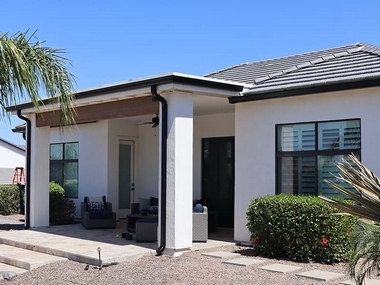
Storms here drop a lot of water in a short window. Gutters do not get a break. Water rushes in faster than downspouts can move it out. The gutter stays full longer than it should. That constant pressure pulls on the hangers and the fascia behind them.
If the hangers are old or loose, they start to bend or pull free. That is when you see long runs sag or tilt forward instead of sitting tight against the roofline.
The hanger problem most homes have
Many older homes still use spike and ferrule hangers. They were popular years ago, but they are not ideal for a place like Tampa Bay. Those spikes rely on wood staying solid. But wood gets wet, dries out, expands, and contracts. Over time, the spike loosens. Once that happens, the gutter loses support.
Hidden hangers spaced every 24 inches are much stronger. They spread the weight evenly and hold the gutter tight, even when it is full of water during a storm.
Signs sagging is becoming a real issue
Some warning signs are easy to miss at first. Look for gutters pulling away from the fascia, runs that dip or tilt, water spilling over the edge during normal rain, or visible gaps along the roofline. Those usually mean the system is under stress.
Why ignoring sagging usually costs more
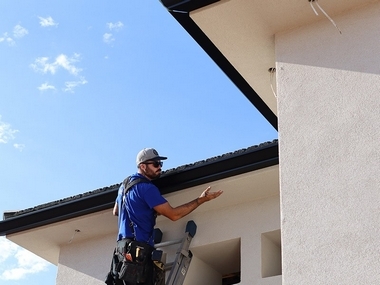
Sagging gutters do not just look bad. They stop working right. Water spills over. It runs behind the gutter. Fascia boards stay wet. Over time, wood damage starts. What began as a hanger issue turns into a fascia repair.
What repairs usually cost in Tampa Bay
Basic gutter reattachment typically runs $250 to $700, depending on how many sections need support. If fascia damage is involved, repairs often fall in the $600 to $1,500 range.
Do not wait for the next stormpSagging gutters rarely fix themselves. Storms will keep coming. CR Gutters, Inc.™ helps Tampa Bay homeowners secure sagging gutters, upgrade outdated hangers, and prevent fascia damage before it spreads. Call (941) 367-2727 to get your gutter system straightened out and ready for the next storm.